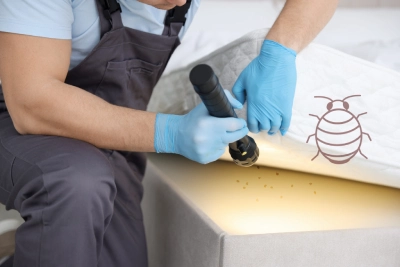
Finding bed bugs in your Buffalo home can be overwhelming. Most homeowners immediately want to know the cost and timeline.
Cost and timing depend on how far the infestation has spread, how many rooms or units are affected, the treatment method, and the preparation required. A small problem found early is usually easier to manage than activity that has reached several rooms or neighboring apartments.
A professional bed bug inspection helps confirm the pest, identify affected areas, and support an accurate treatment plan.
How Much Does Bed Bug Treatment Cost in Buffalo?
General industry estimates for professional bed bug removal range from about $300 to $5,000, with many treatments falling between $1,000 and $3,500. Whole-home heat treatment may cost approximately $3,000 to $6,000 for a home under 2,500 square feet.
These are broad estimates, not a local quote. The final cost depends on the inspection, treatment method, and work required. More information is available in this guide to bed bug exterminator costs.
| Situation | Effect on cost | Effect on timeline |
| Early activity in one room | Usually lower | Fewer areas need treatment |
| Bugs in several rooms or furniture pieces | Usually higher | Follow-up is more likely |
| Duplex or multi-unit property | Depends on affected units | Coordination may extend treatment |
| Heavy clutter or limited access | More preparation and labor | Treatment may be delayed |
| Heat, steam, residual, or combined treatment | Equipment and labor vary | Visit length and frequency vary |
A one-bedroom apartment with early activity is different from a large home with bugs in several rooms. Nearby apartments may also need inspection.
What Is the Typical Bed Bug Treatment Timeline?
Bed bug control is not always a one-day process. Many infestations require at least two treatments and monitoring over a month or longer. The schedule depends on severity, property size, preparation, access, and treatment method.
A typical process includes:
Inspection: The technician confirms the pest and checks mattresses, box springs, bed frames, headboards, upholstered furniture, baseboards, and nearby cracks.
Preparation: Residents may need to launder fabrics, reduce clutter, vacuum, and provide access to walls and furniture. Preparation should follow the company’s bed bug treatment instructions.
Initial treatment: The selected method is applied to affected areas.
Follow-up: Remaining activity and newly hatched bed bugs are checked and treated when necessary.
Monitoring: The property is watched for live bugs, shed skins, eggs, and dark spotting.
The bed bug treatment timeline can vary considerably between a single-room problem and an infestation involving multiple units.
Why Bed Bugs Often Require More Than One Visit
Bed bugs hide near sleeping or resting areas, including mattress seams, box springs, bed frames, couches, chairs, nightstands, baseboards, and wall openings.
Eggs and newly hatched nymphs can be difficult to locate. Even when exposed insects are killed during the first treatment, hidden activity may remain. Effective control combines inspection, preparation, treatment, follow-up, and monitoring.
DIY sprays may kill visible insects but fail to reach the full infestation. Using several products without a plan can also scatter bed bugs into other rooms or create unnecessary pesticide exposure.
Bed Bug Treatment Options
Professional bed bug treatment options may include one method or a combination of the following.
Steam Treatment
High-temperature steam kills bed bugs and eggs on direct contact. It is useful on seams, furniture, cracks, and other accessible hiding places.
Heat Treatment
Heat treatment raises the temperature throughout the treatment area. Lethal temperatures must reach protected hiding places and remain there for the required period.
Residual Treatment
EPA-registered residual products may be applied to approved areas where bed bugs hide or travel. Applications must follow the product label and should be targeted rather than random.
Combination Treatment
Some infestations are better addressed with steam or heat plus residual treatment, preparation, monitoring, and follow-up visits.
Buffalo-Specific Bed Bug Challenges
Buffalo’s mix of two-family homes, rental properties, and multi-unit buildings can make treatment more complex. Bed bugs may move between units on belongings or through shared spaces, pipes, wiring routes, and wall openings. Treating one apartment may not solve the problem when activity is also present next door.
Buffalo’s cold winters are not a dependable treatment method. Placing furniture outside or opening windows for a few hours will not reliably eliminate bed bugs. Effective freezing requires infested items to remain at 0°F for at least four days.
Travel, used furniture, shared laundry rooms, guests, and luggage can introduce bed bugs. An infestation is not a sign of poor housekeeping, although clutter creates more hiding places.
Should You Throw Away Your Mattress?
Do not automatically discard a mattress, couch, or chair before an inspection. Moving an infested item through hallways, stairwells, vehicles, or other rooms can spread bugs and eggs.
Many items can be treated. If disposal is necessary, follow professional instructions so the item can be removed without spreading the infestation.
When to Schedule Bed Bug Service
Homeowners searching for bed bug service near me should schedule an inspection as soon as they find live bed bugs, eggs, shed skins, dark spotting, or repeated activity around beds and furniture.
Bites alone do not confirm bed bugs, but bites combined with physical signs should be checked promptly. Service should also be scheduled after travel, the purchase of used furniture, or a reported infestation in a neighboring apartment if suspicious signs appear.
Until the inspection, avoid moving mattresses, furniture, clothing, or bags between rooms. Moving infested items can spread bed bugs and make treatment more difficult.
What Buffalo Homeowners Should Expect
A small infestation limited to one room will usually cost less and move faster than a problem involving several rooms, upholstered furniture, or neighboring apartments. Many cases require more than one visit and several weeks of monitoring. Infestations in Buffalo duplexes and multi-unit buildings may take longer because nearby units may also need inspection.
The inspection determines the treatment method, preparation requirements, price, and expected timeline. If physical signs are present, schedule a bed bug inspection in Buffalo before moving furniture or applying additional products.